
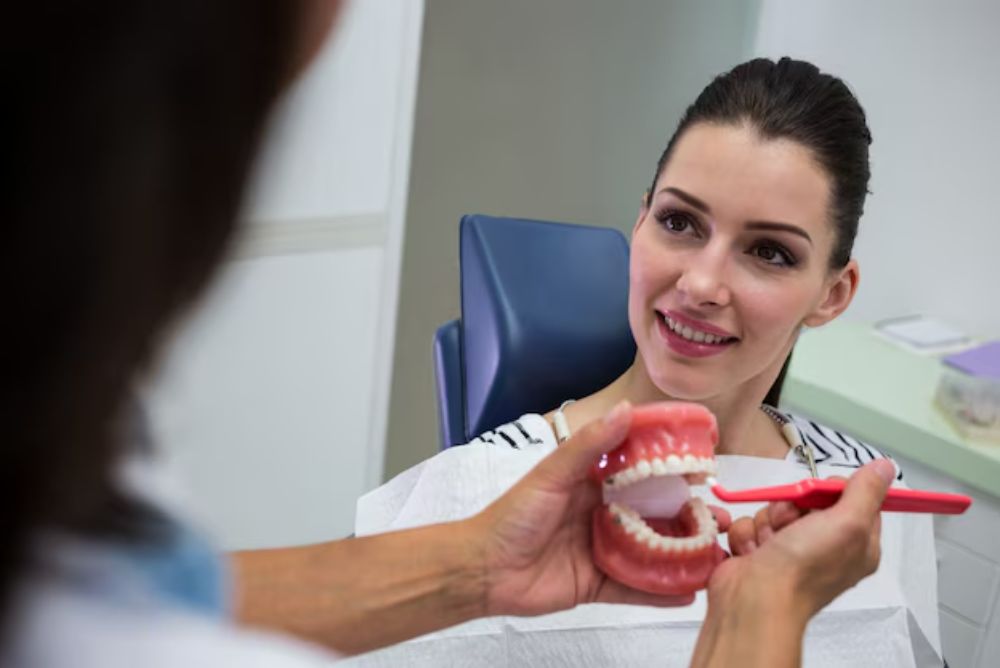
Losing all or most of your teeth is a significant life change. It affects how you eat, how you speak, and how you feel about yourself every single day. But it does not have to be permanent.
Complete dentures in Bridgeland offer a time-tested, effective solution that restores your smile, your ability to eat comfortably, and your confidence, all without surgery.
This guide covers everything you need to know about full dentures in plain, easy-to-understand language.
What Are Complete Dentures?
Complete dentures—also called full dentures, are removable dental appliances that replace an entire arch of missing teeth. They can replace the upper teeth, the lower teeth, or both.
A complete denture consists of:
- Artificial teeth — made from acrylic resin or porcelain, designed to look natural and match the appearance of real teeth
- A gum-coloured base—made from acrylic and tinted pink to closely resemble natural gum tissue
The denture rests on the gum ridge and is held in place through natural suction, particularly the upper denture, which benefits from a larger surface area. The lower denture is typically less stable due to the shape of the lower jaw and the presence of the tongue.
Denture adhesive is optional but commonly used to enhance stability and confidence throughout the day.
Who Needs Complete Dentures?
Complete dentures are recommended when all, or virtually all, natural teeth are missing or need to be removed.
You may be a candidate for complete dentures if:
- You have lost all your teeth due to decay, gum disease, or injury
- Your remaining teeth are too damaged or infected to save
- You are currently wearing a partial denture, but additional teeth have been lost
- You want a non-surgical solution to restore full mouth function and appearance
A thorough assessment at a trusted dental clinic in Bridgeland will determine whether complete dentures are the most appropriate option, or whether implant-supported solutions might better suit your needs and goals.
The Complete Dentures Procedure — What to Expect
Understanding the complete dentures procedure step by step helps remove the uncertainty and makes the whole process feel manageable.
Step 1 — Initial Consultation
Your dentist carries out a thorough assessment of your mouth, checks your health history, and discusses your aims and expectations. X-rays may be taken to examine bone levels and the status of existing teeth.
Step 2 — Extractions (If Needed)
If any remaining teeth need to be removed before dentures can be made, this step is completed first. Some patients choose immediate dentures—placed on the same day as extractions—so they are never without teeth.
Step 3 — Impressions and Measurements
Detailed impressions of your gum ridges are taken. Your dentist also records measurements of how your jaw closes and how much vertical space exists between your upper and lower jaws. This information guides the design and fit of your dentures.
Step 4 — Trial Denture
A trial or wax-up denture is created so you and your dentist can assess the fit, appearance, and bite before the final version is made. Adjustments to tooth shape, colour, and positioning can be made at this stage.
Step 5 — Final Denture Fitting
The permanent dentures are delivered and fitted. Your dentist checks the fit, bite, and comfort carefully and makes any necessary fine adjustments.
Step 6 — Follow-Up Appointments
Several follow-up visits are typically needed in the weeks after delivery to address any soreness or adjustments as the mouth adapts to the new dentures.
The Adjustment Period — What Is Normal?
Most patients need two to six weeks to fully adjust to wearing complete dentures. During this time, some things are completely normal:
- Mild soreness or pressure on the gum tissue
- Increased saliva production as the mouth adjusts
- Minor difficulty with speech, particularly with words containing “s” or “th” sounds
- Some challenges with chewing, especially firmer foods
These experiences settle significantly as the mouth adapts. Eating soft foods and practicing speaking aloud can speed up the adjustment process considerably.
If discomfort is persistent or significant, follow-up appointments allow the denture to be adjusted for a better fit.
Caring for Your Complete Dentures
Proper care extends the life of your dentures and keeps your mouth healthy.
Daily care routine:
- Remove and rinse dentures after every meal to clear food debris
- Brush dentures gently with a soft denture brush and mild soap—avoid regular toothpaste as it is too abrasive
- Soak dentures overnight in a denture-cleaning solution to maintain shape and hygiene
- Rinse your mouth, gums, and tongue every morning before inserting dentures
- Handle dentures over a folded towel or basin of water—they can break if dropped
Regular professional check-ups remain important even with complete dentures. Your dentist monitors gum health, checks the fit as the bone shape changes over time, and screens for oral cancer.
Your Complete Smile Awaits — Crescent Heights Dental Clinic Is Here for You
Not having teeth does not mean missing out on a smile or a life. Full dentures allow patients to eat, speak, and smile with comfort and confidence and look and feel completely natural.
At the Crescent Heights Dental Clinic, we take great pride in carefully guiding every patient through the denture process with patience and care. You will receive full attention from the very first consultation to the last fitting and after.
Schedule an appointment with us today and take your first step towards a complete smile!
Frequently Asked Questions
How long do complete dentures last?
With proper care and regular professional assessments, complete dentures typically last between five and ten years; the fit may need to be adjusted, or the denture relined, as the jawbone gradually changes shape over time.
Can I sleep with my complete dentures in?
Most dentists recommend removing dentures at night to give the gum tissue time to rest and recover, soaking them overnight also helps maintain their shape and keeps them clean and hygienic.
Will complete dentures affect how I speak?
Some patients notice a slight change in speech initially, particularly with certain sounds—but this typically resolves within a few weeks as the tongue and lips naturally adapt to the new denture.
Are immediate dentures a good option?
Immediate dentures, placed on the same day as extractions, allow patients to leave without a visible gap, but they often require more frequent adjustments as the gums heal and change shape in the months following extraction.